What we check before selection
- Heavy paper stacks and rolls
- Different formats and support requirements
- Separating raw stock, finished runs and reusable remnants
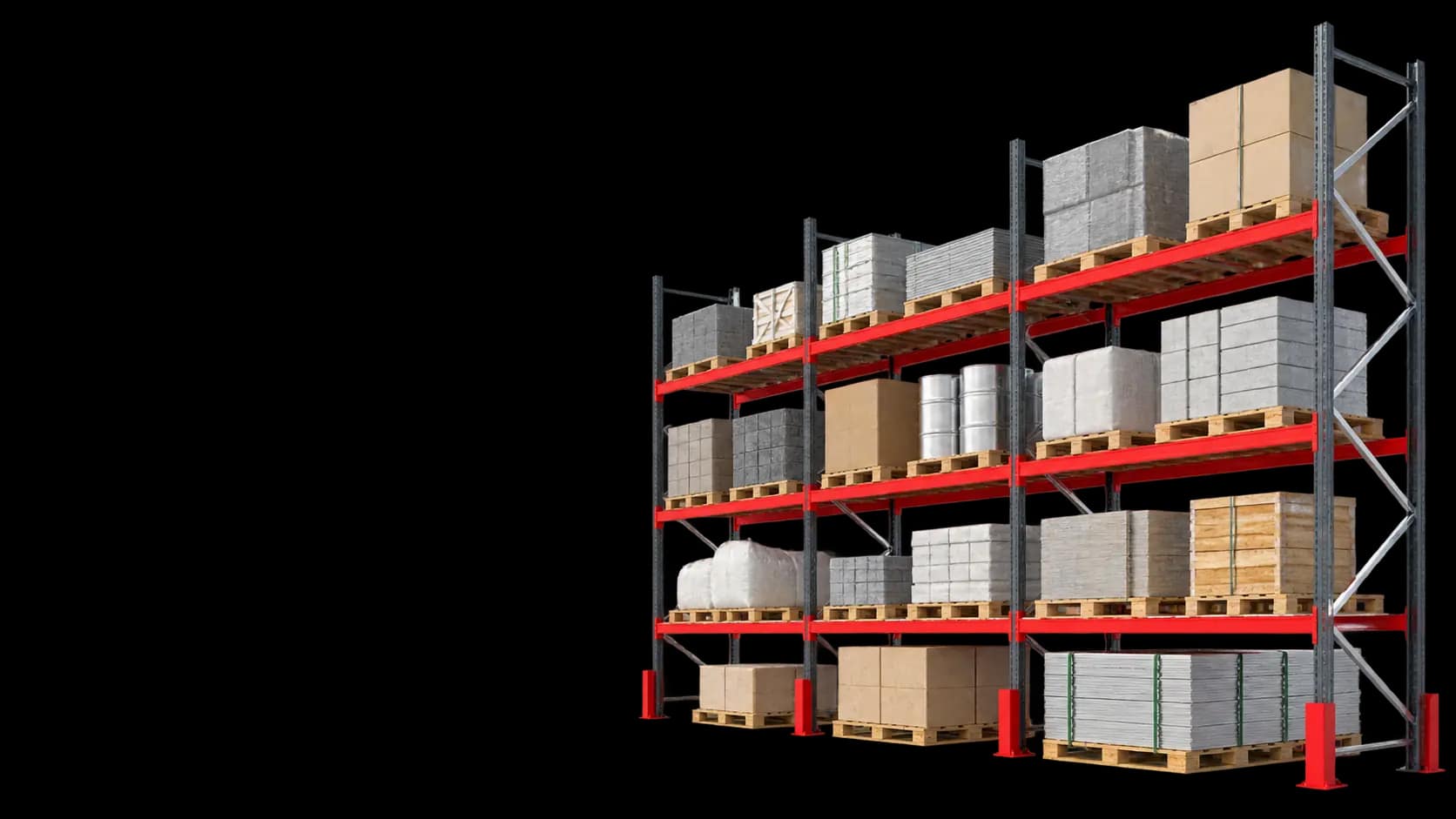
Connect paper and cardboard stock with press supply and dispatch of finished print runs. Select pallet and specialised racking for the actual weight, format and packaging, with clear locations for active batches and finished orders.
Connect paper and cardboard stock with press supply and dispatch of finished print runs. Select pallet and specialised racking for the actual weight, format and packaging, with clear locations for active batches and finished orders.
Compare storage methods for the application: Printing, paper and cardboard: loads, access and flow help determine the suitable structure. We will agree on bay dimensions and levels according to your containers and equipment.
 Pallet storage · Configurator
Printing, paper and cardboard: Pallets, big bags and containers · Every position
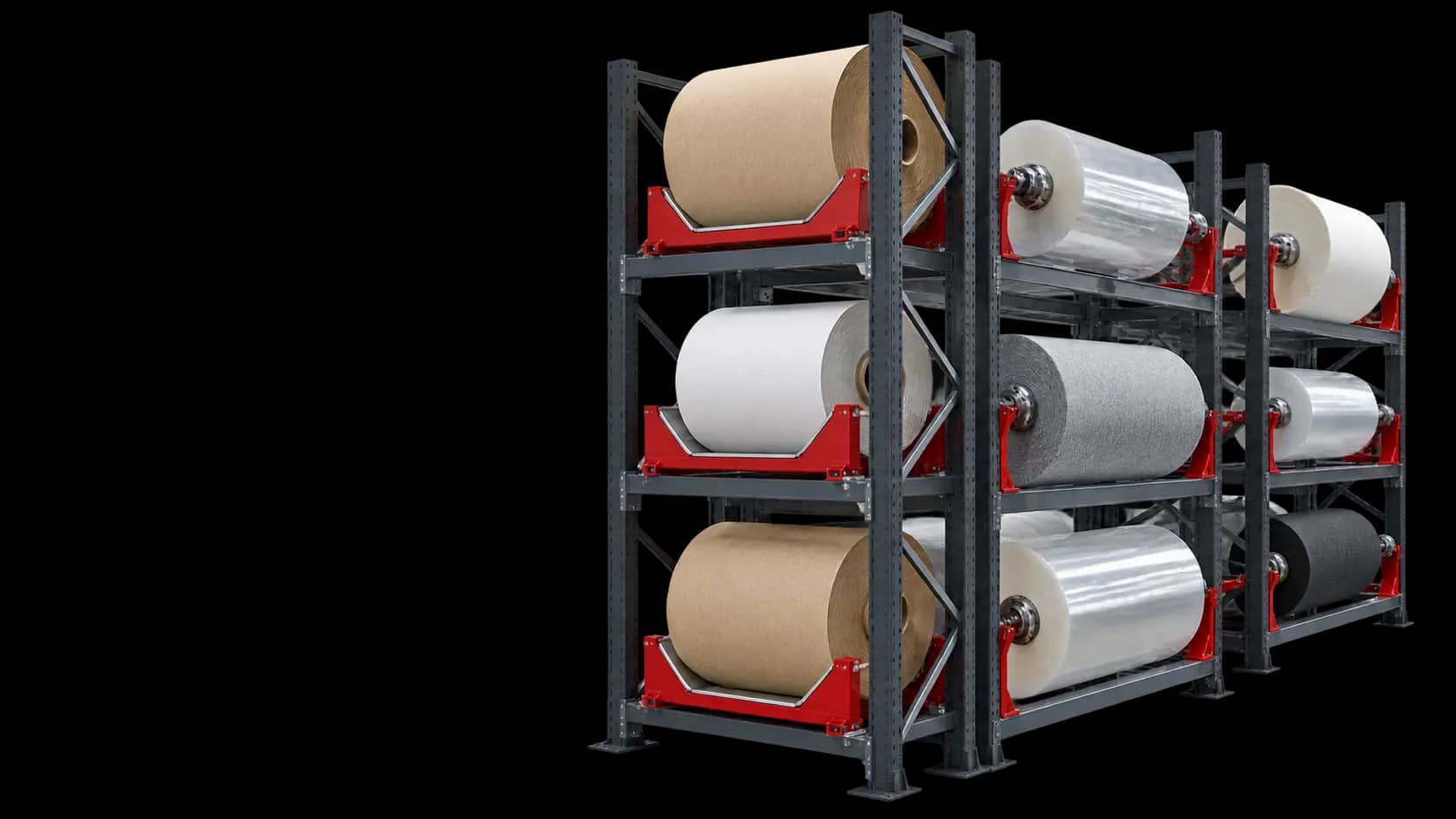 Specialized loads · Engineering calculation
Printing, paper and cardboard: Film, paper, fabric, linoleum and roll materials · Every roll or position
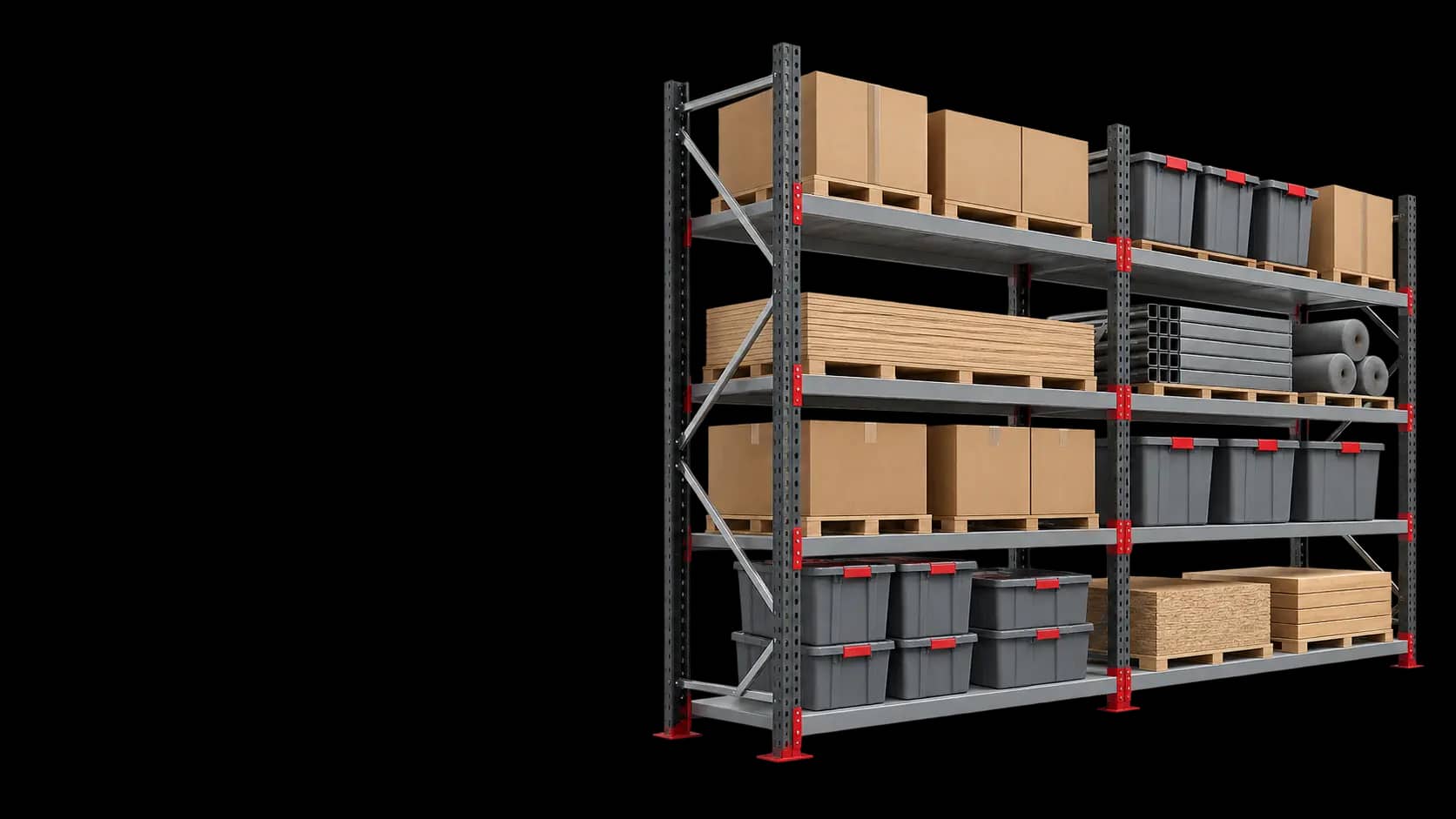 Cartons and piece goods · Configurator
Printing, paper and cardboard: Cartons and heavy piece goods · Every shelf
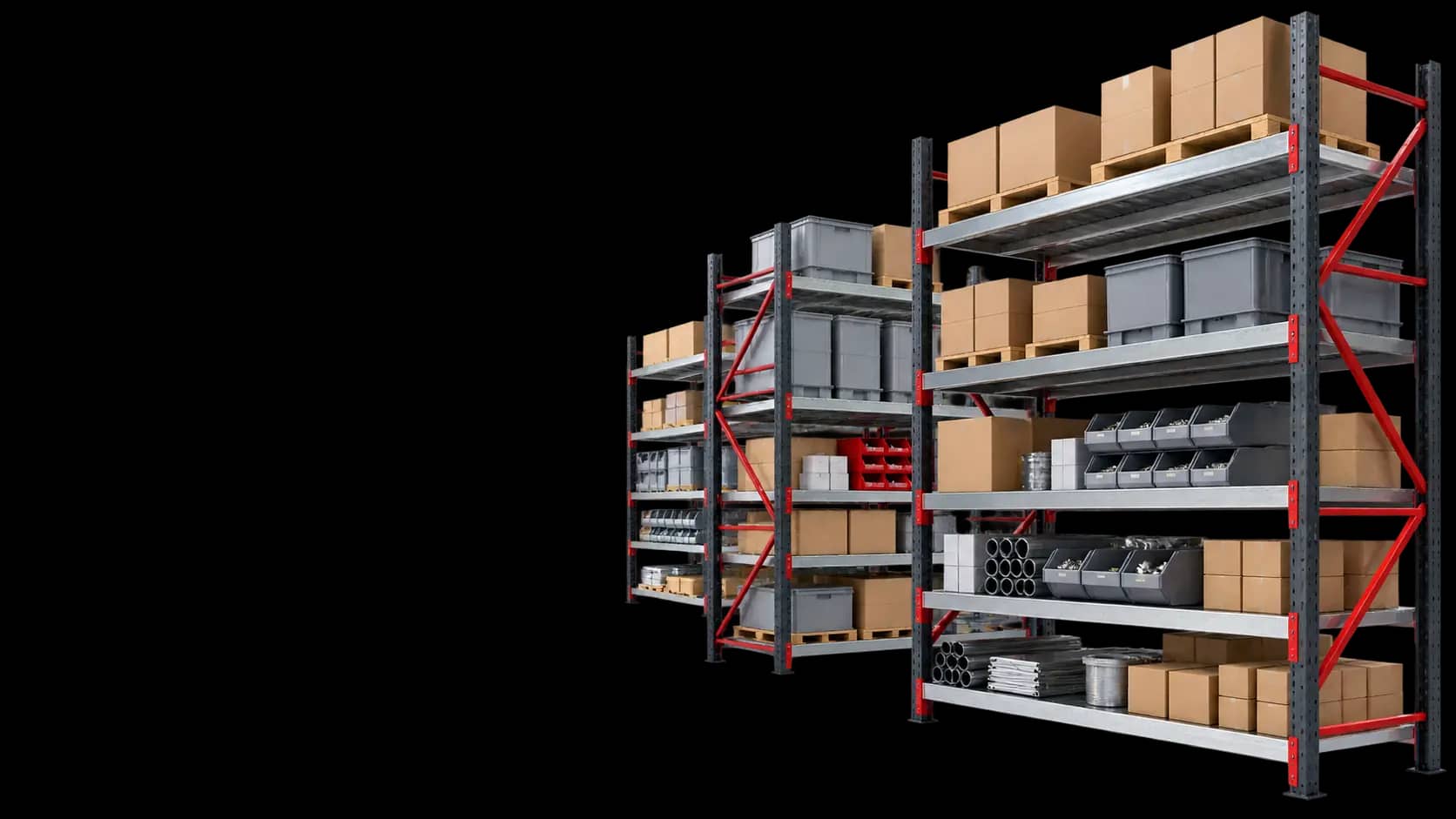 Cartons and piece goods · Configurator
Printing, paper and cardboard: Cartons and piece goods · Every shelf
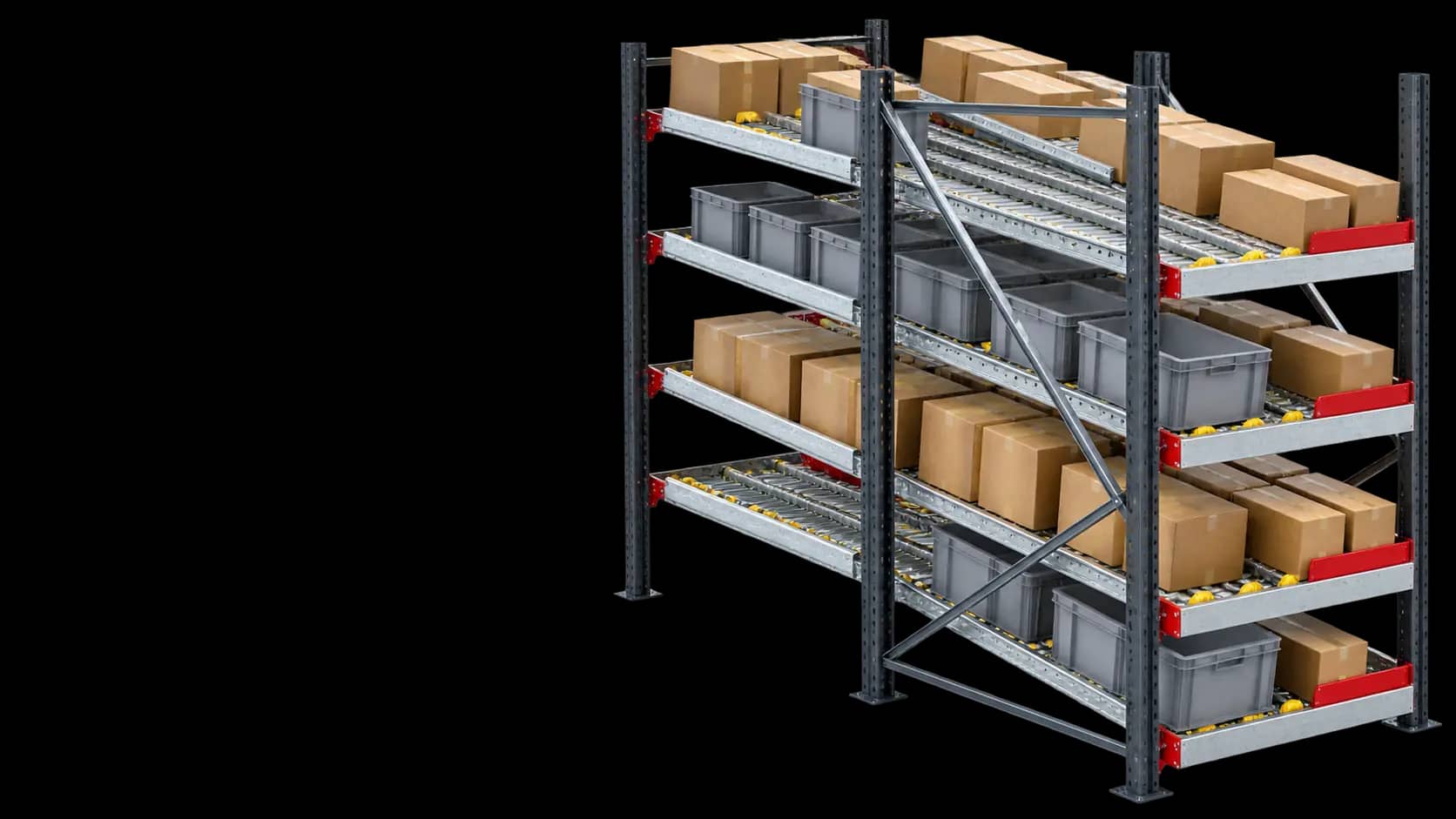 Cartons and piece goods · Engineering calculation
Printing, paper and cardboard: Cartons, trays and KLT bins · Separate operating faces
Prepare load and warehouse parameters for the selected system.
For paper and cardboard packs, consider sheet format, pallet dimensions and gross weight. Match level heights to batch size and equipment operating clearance.
Rolls differ in diameter, length, weight and permitted orientation. Select supports and restraints together with the handling attachment; a standard beam requires a contact check before use.
Separate finished print runs, consumables and work in progress. The layout should support the production sequence and access to remnants of the required batch.
Compare suitable bays and kits. Confirm load dimensions, weight and installation conditions before ordering.
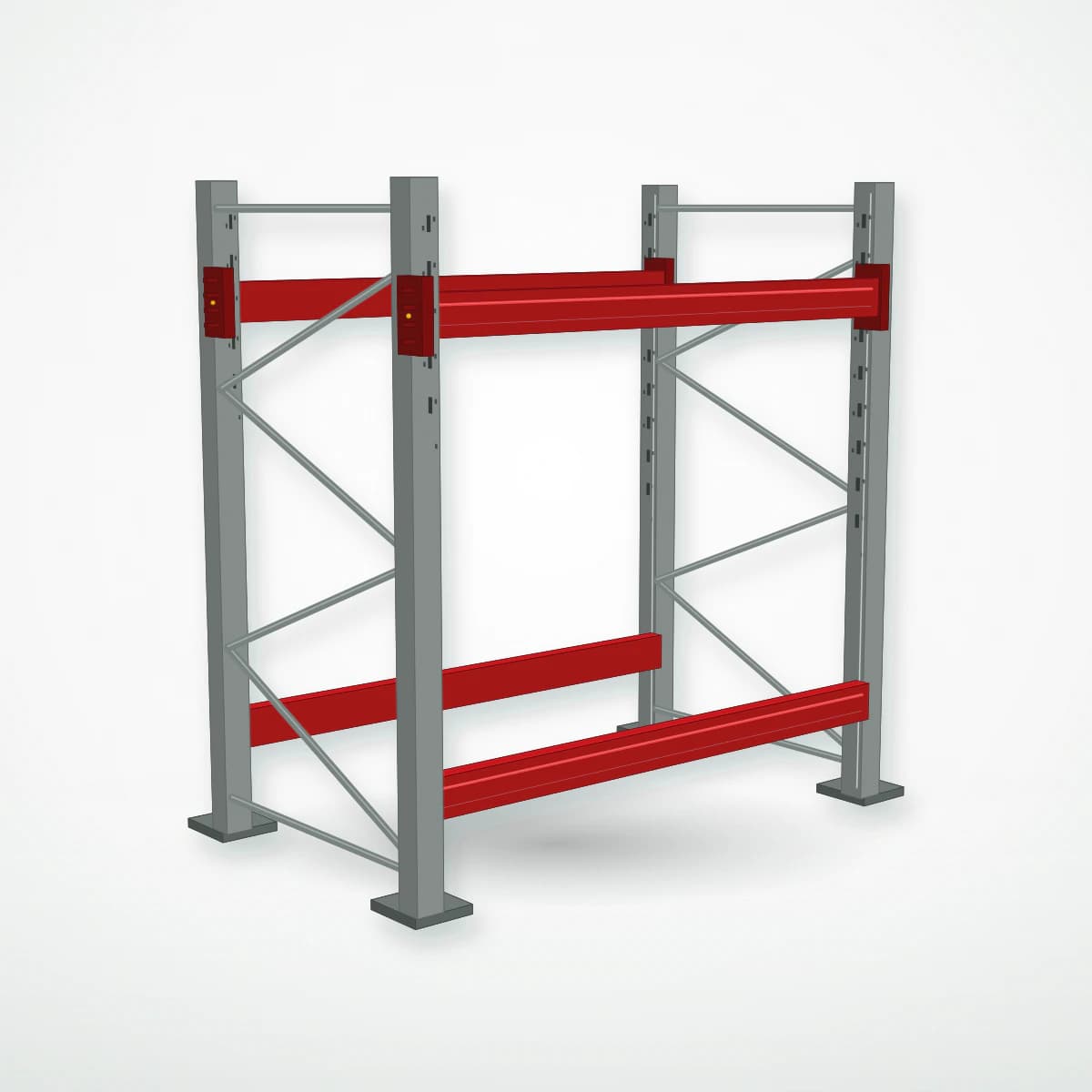 PF-STD · D1000 · Starter bay
Arrange pallet storage with direct access to each position from the operating aisle. Front pallet bay without decking 2000×1800×1000, 2 levels, starter. Series PF-STD D1000; dimensions H×W×D: 2000×1800×1000 mm; 2 storage levels. The listed configuration has limits of 2200 kg per level and 4400 kg per bay; both limits apply when arranging goods. Use this starter bay to begin a row and select compatible add-on bays for expansion. Confirm the loading arrangement, load supports and scope of supply before ordering.
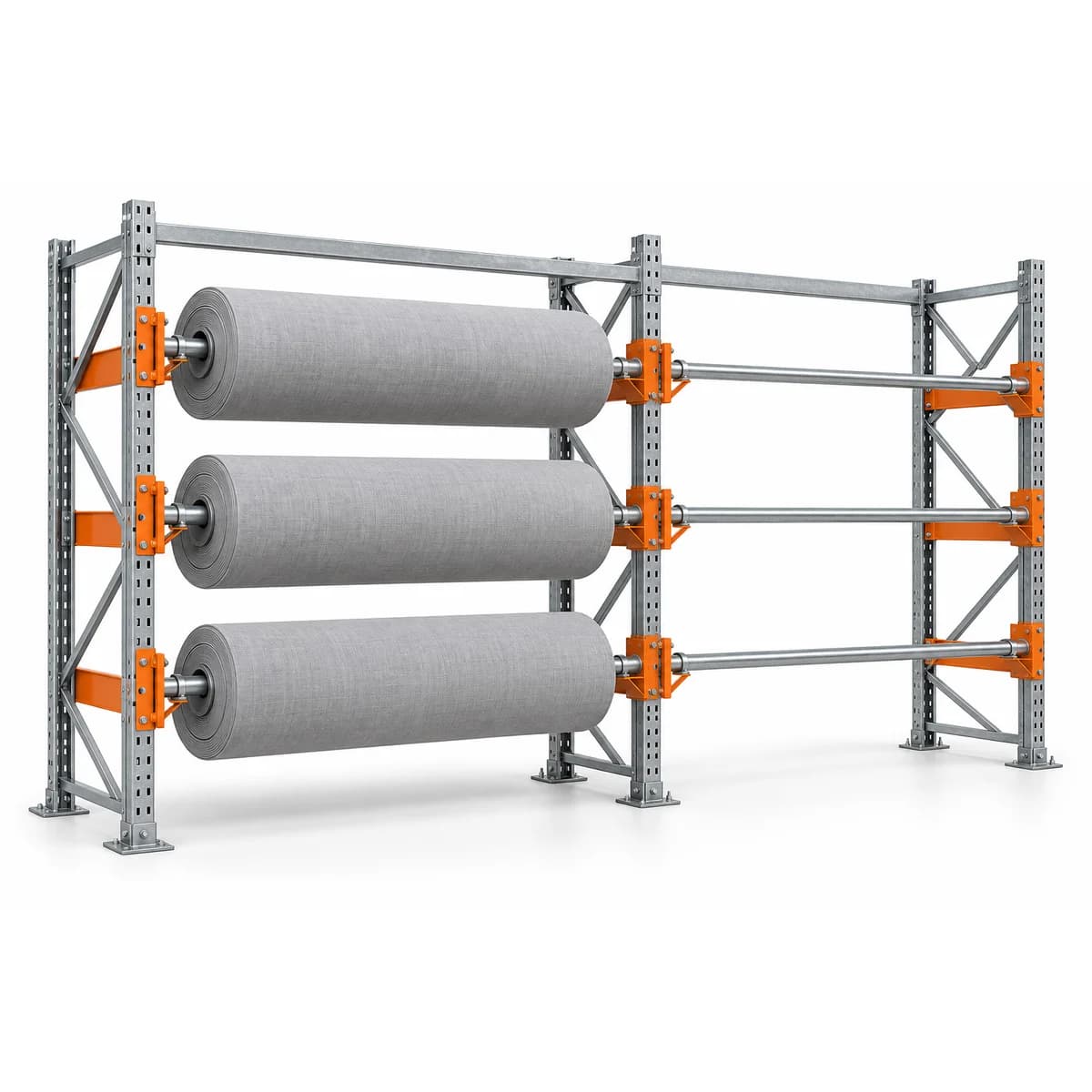 RL · Racking set
Roll storage racks Maxstore RL-01, 1 bay. Store rolled materials on supports selected for roll diameter, length and weight, with an agreed storage orientation and retrieval method. Configuration height: 2400 mm; 2 levels; module width and depth: 2700×1100 mm. Confirm load dimensions, operating aisles and supports. The target load is a design input; the permitted load is determined for the approved configuration.
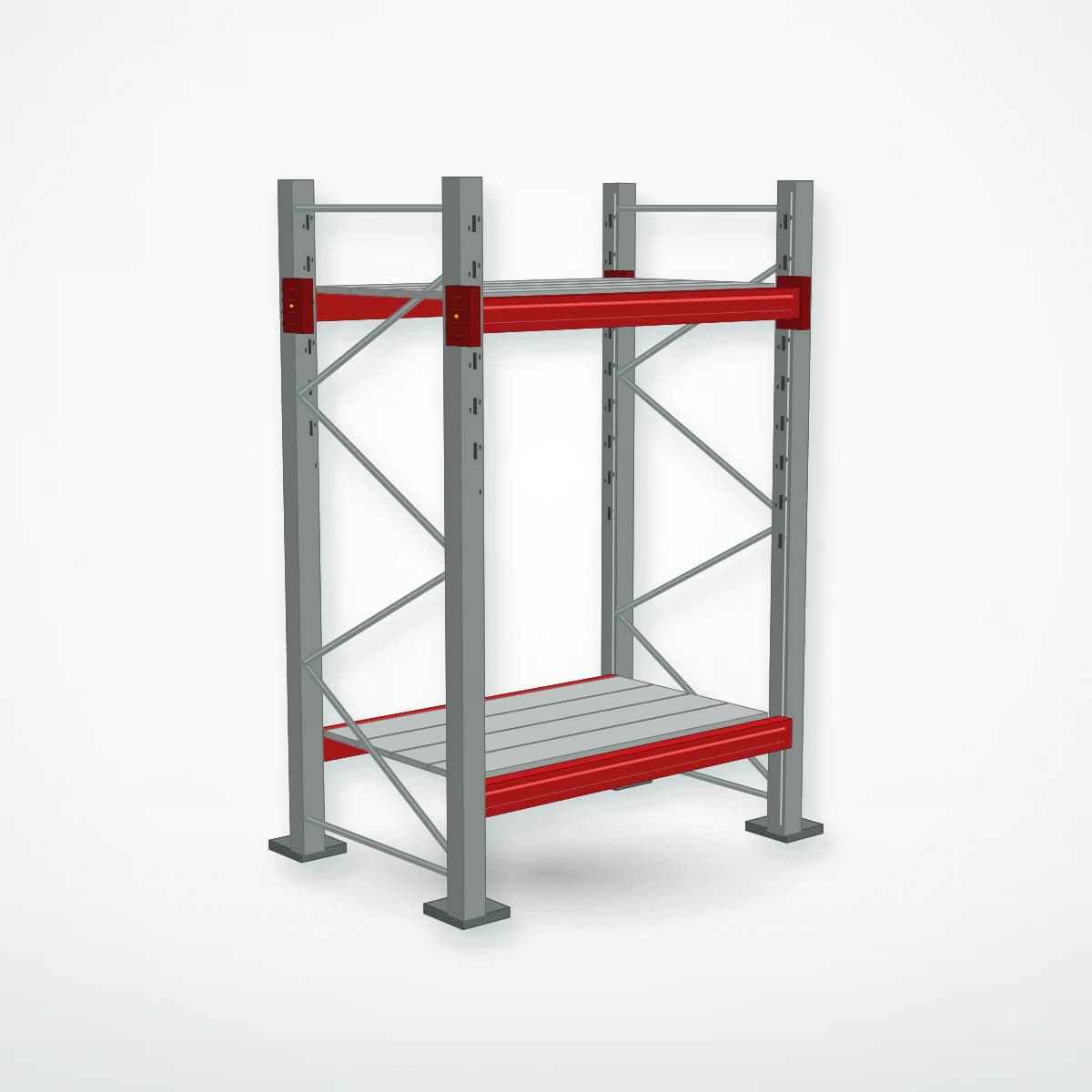 PF-DECK · MET900 · Starter bay
Create front-access storage with steel shelves for compatible pallets and containers. Front pallet bay with steel shelves 2000×1250×785, 2 levels, starter. Series PF-DECK MET900; dimensions H×W×D: 2000×1250×785 mm; 2 storage levels. The listed configuration has limits of 500 kg per level and 1000 kg per bay; both limits apply when arranging goods. Use this starter bay to begin a row and select compatible add-on bays for expansion. Confirm the loading arrangement, load supports and scope of supply before ordering.
Describe your goods, building, handling equipment and expected throughput. If you have a site plan, reply to the assigned manager with the file after your request is registered.
