What we check before selection
- Point loads and heavy units
- Safe transfer to a crane, hoist or forklift
- Set identification and tooling-condition control
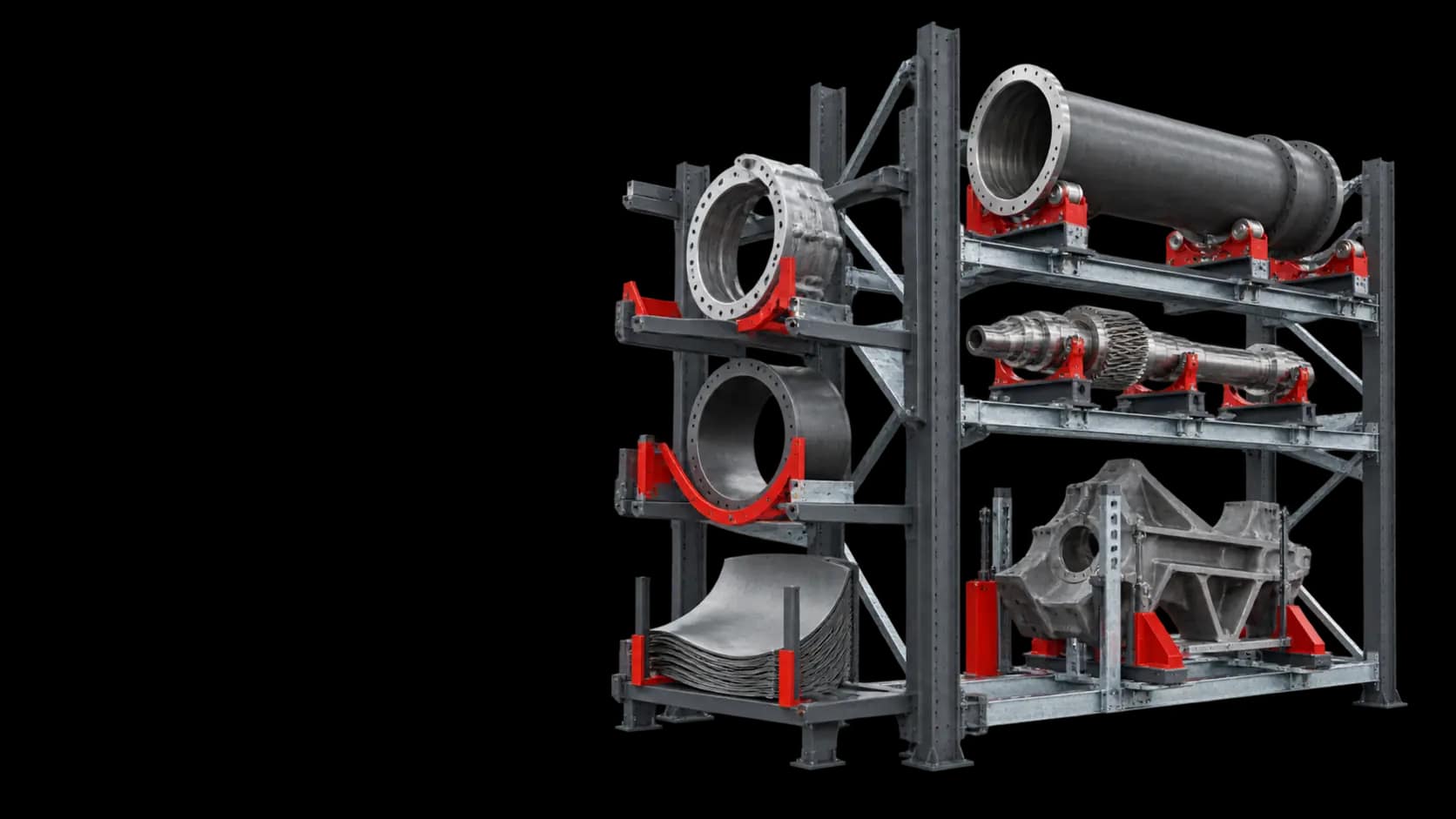
We separate hand tools, heavy tooling and moulds by weight, centre of gravity, handling method and issue frequency.
For heavy tooling, weight alone is not decisive: centre of gravity, bearing area, handling method and hand-off to the machine also matter. A standard shelving row must not be specified without checking these parameters.
Compare storage methods for the application: Tools, tooling and moulds: loads, access and flow help determine the suitable structure. We will agree on bay dimensions and levels according to your containers and equipment.
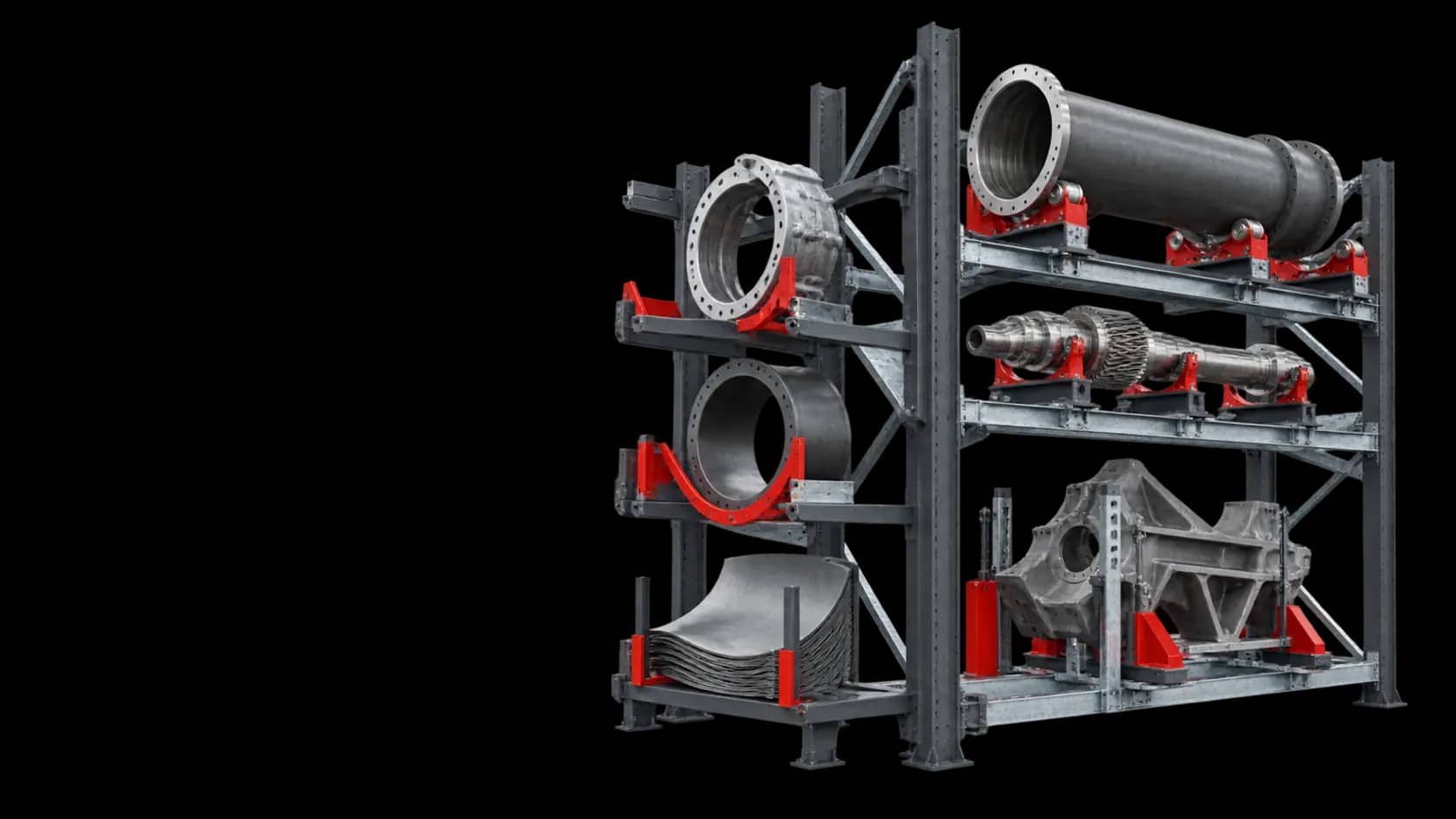 Specialized loads · Engineering calculation
Tools, tooling and moulds: Non-standard goods · By handling process
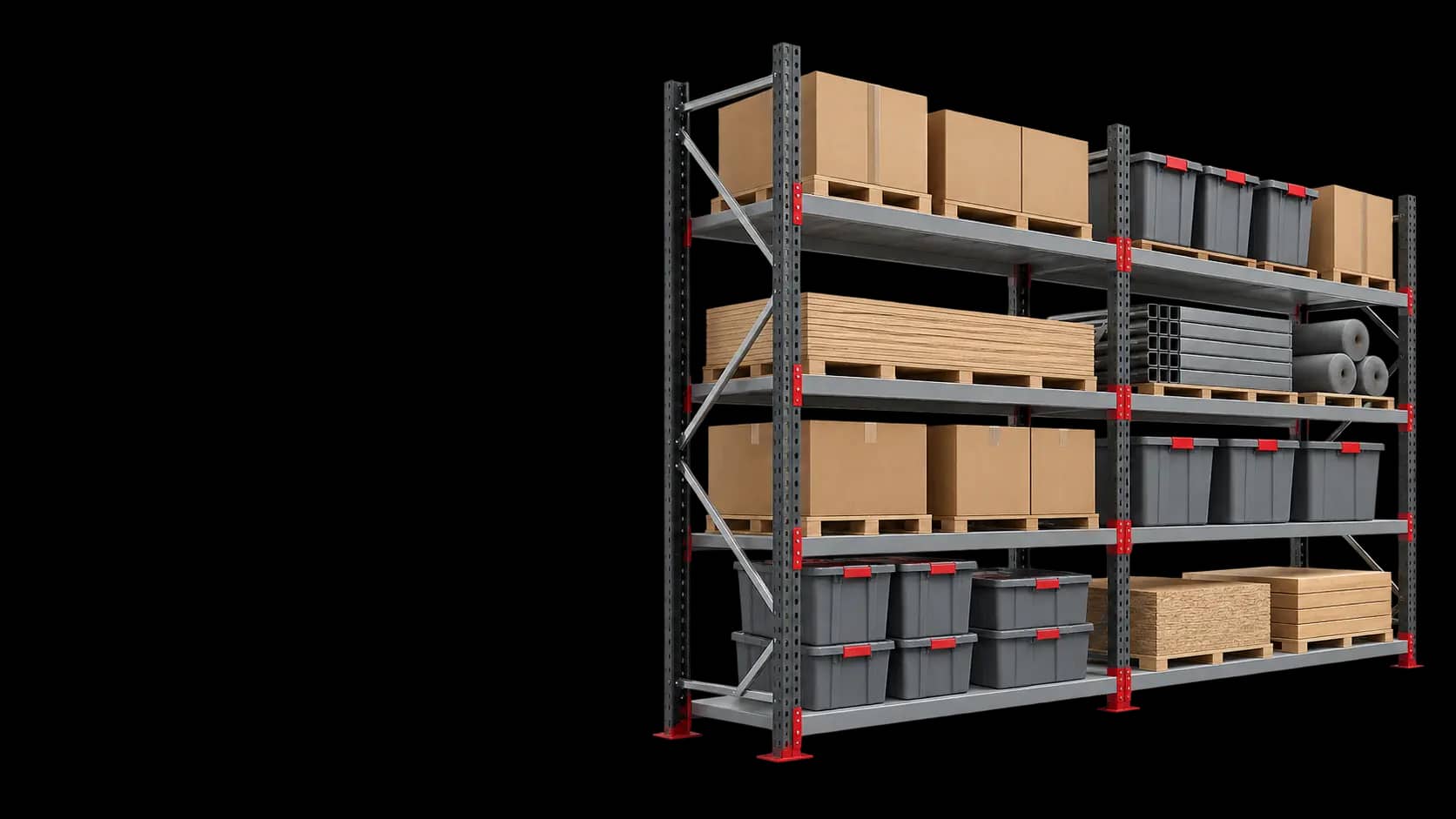 Cartons and piece goods · Configurator
Tools, tooling and moulds: Cartons and heavy piece goods · Every shelf
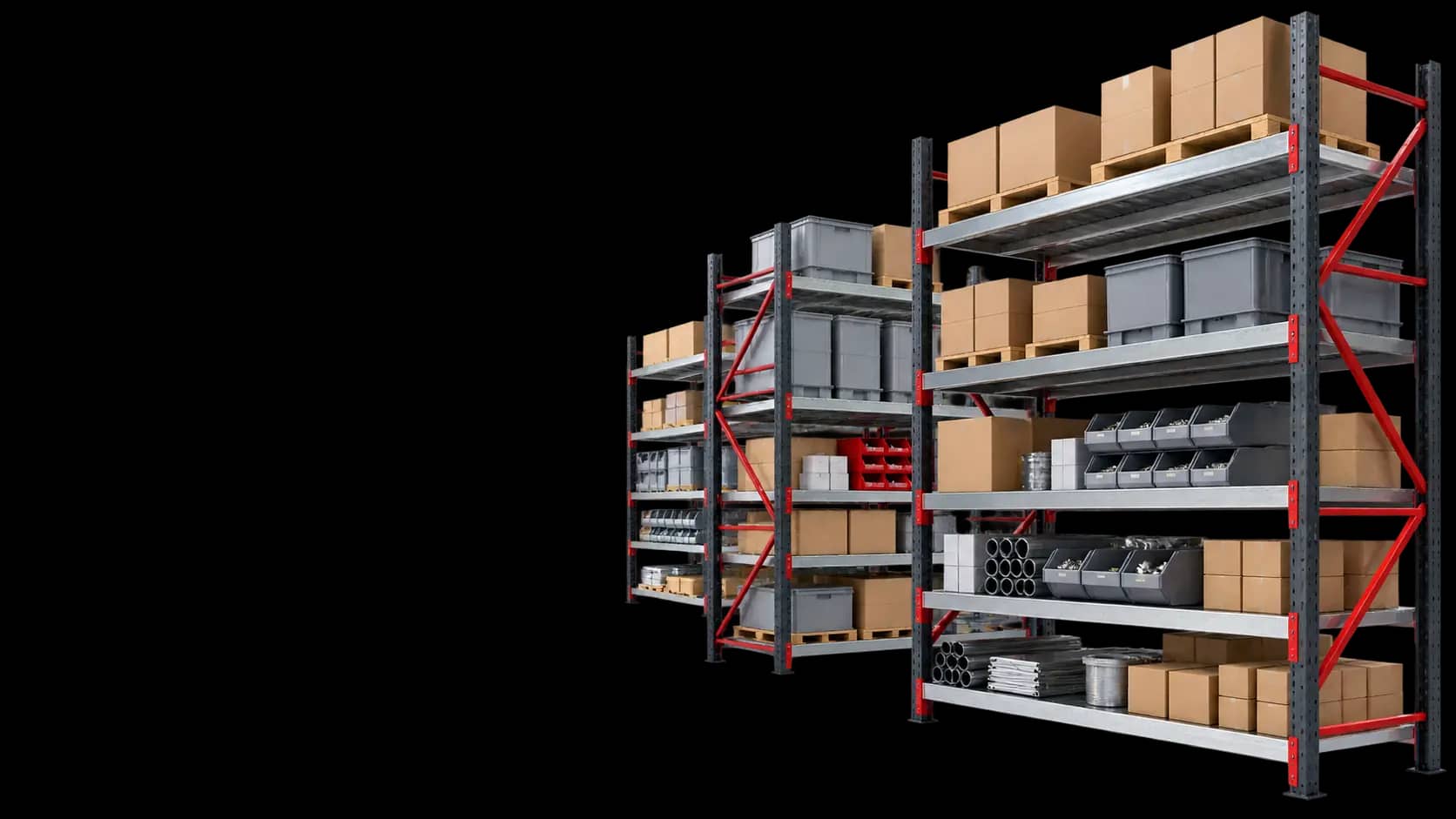 Cartons and piece goods · Configurator
Tools, tooling and moulds: Cartons and piece goods · Every shelf
 Pallet storage · Configurator
Tools, tooling and moulds: Pallets, big bags and containers · Every position
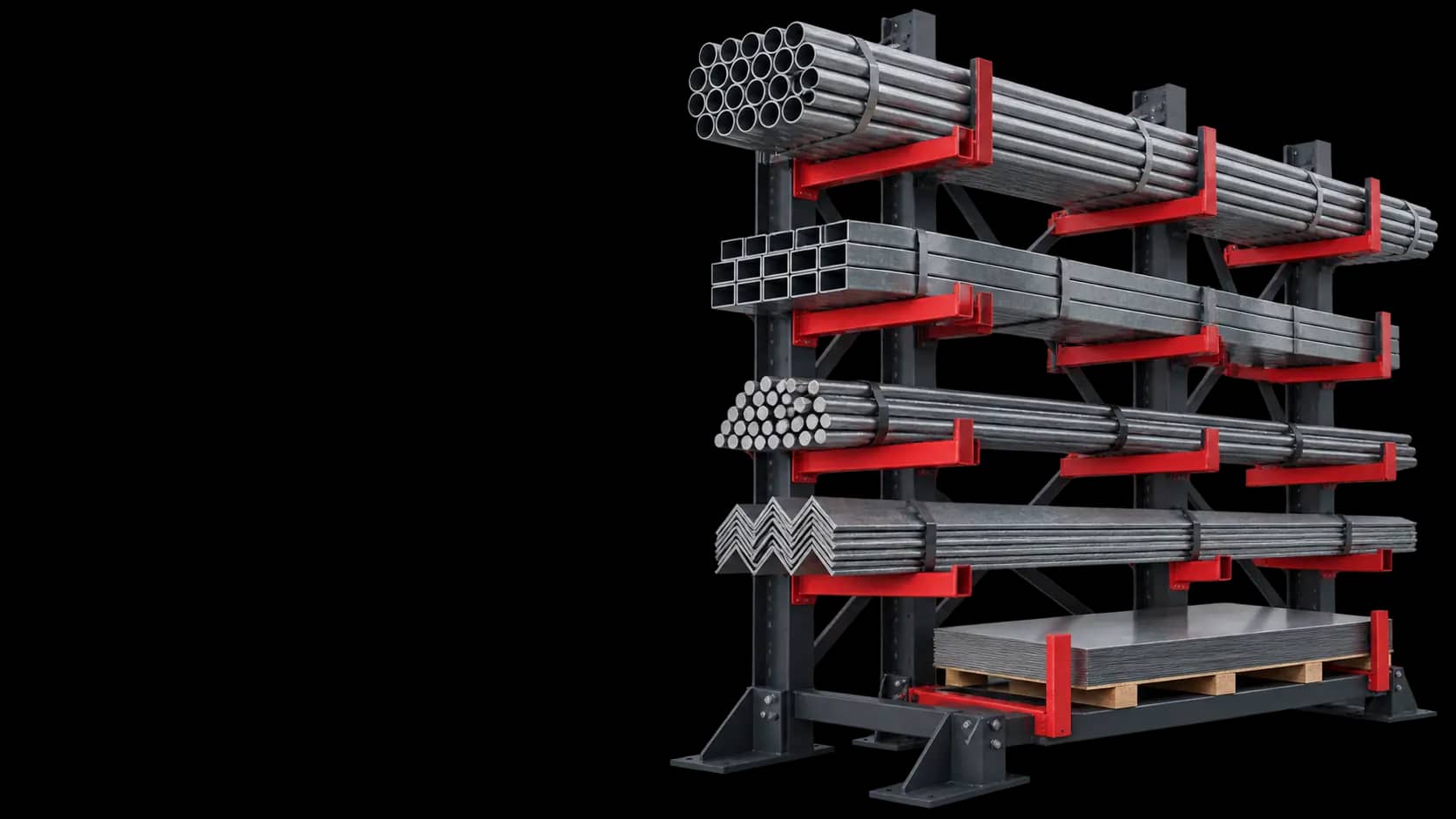 Long goods · Engineering calculation
Tools, tooling and moulds: Pipes, sections, bars, sheets and metal bundles · Crane, side or front access
Prepare load and warehouse parameters for the selected system.
A mould or die may transfer its load through a small bearing area. The brief records each unit's weight, centre-of-gravity position, base dimensions and the number stored at once. Reinforced levels, pull-out platforms or special cradles are considered for heavy items.
The rack face must let the actual lifting equipment approach safely, clear the required position fully and avoid adjacent levels. A pull-out platform changes the structural scheme and requires interlocks; it cannot be added after manufacture as an ordinary accessory.
Small tools, replaceable inserts and accessories are best stored at addressed locations near the main tooling, in suitable containers or closed bays. The item record links location, permitted load, completeness and condition; it does not replace physical protection and labels.
Compare suitable bays and kits. Confirm load dimensions, weight and installation conditions before ordering.
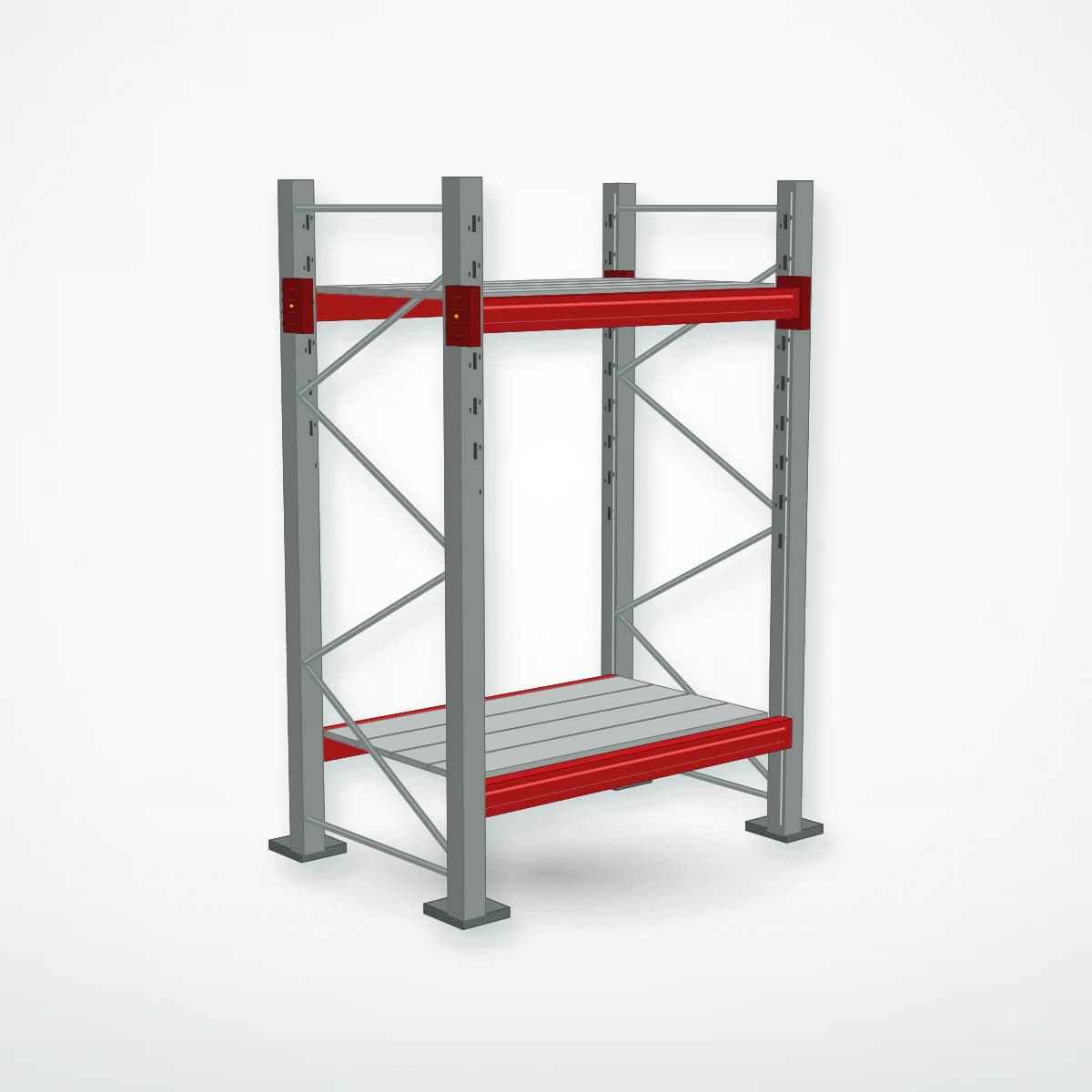 PF-DECK · MET900 · Starter bay
Create front-access storage with steel shelves for compatible pallets and containers. Front pallet bay with steel shelves 2000×1250×785, 2 levels, starter. Series PF-DECK MET900; dimensions H×W×D: 2000×1250×785 mm; 2 storage levels. The listed configuration has limits of 500 kg per level and 1000 kg per bay; both limits apply when arranging goods. Use this starter bay to begin a row and select compatible add-on bays for expansion. Confirm the loading arrangement, load supports and scope of supply before ordering.
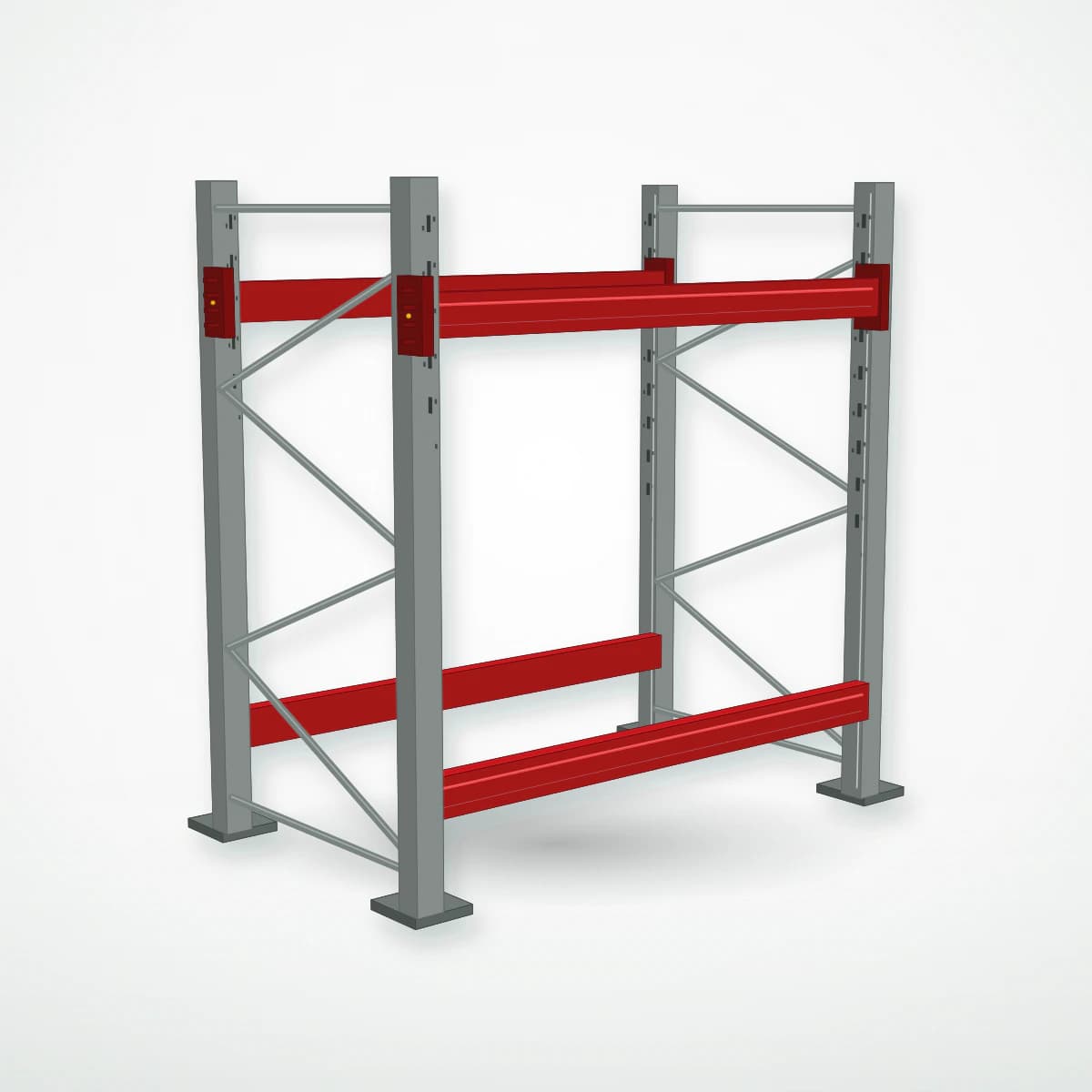 PF-STD · D1000 · Starter bay
Arrange pallet storage with direct access to each position from the operating aisle. Front pallet bay without decking 2000×1800×1000, 2 levels, starter. Series PF-STD D1000; dimensions H×W×D: 2000×1800×1000 mm; 2 storage levels. The listed configuration has limits of 2200 kg per level and 4400 kg per bay; both limits apply when arranging goods. Use this starter bay to begin a row and select compatible add-on bays for expansion. Confirm the loading arrangement, load supports and scope of supply before ordering.
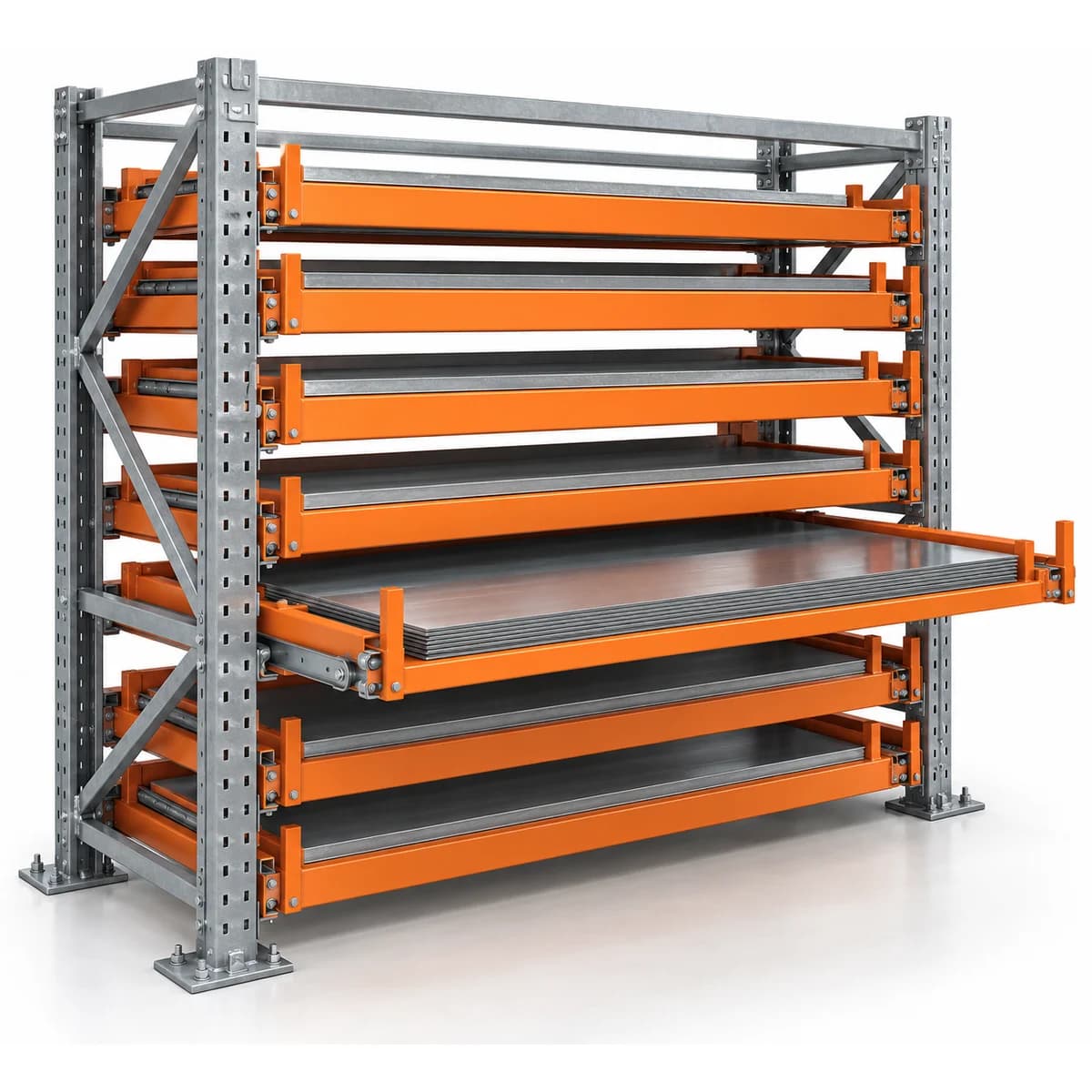 MT · Racking set
Cassette racks for sheet metal Maxstore MT-01, 1 cassette module. Select supports for metal stock by its shape and batch weight, keeping the handling face accessible. Configuration height: 2000 mm; 7 levels; module width and depth: 3000×1600 mm. Confirm load dimensions, operating aisles and supports. The target load is a design input; the permitted load is determined for the approved configuration.
Describe your goods, building, handling equipment and expected throughput. If you have a site plan, reply to the assigned manager with the file after your request is registered.
